El Cuchillo del Centauro del Norte
Explore the Artifact
El Cuchillo del Centauro del Norte
Explore the Artifact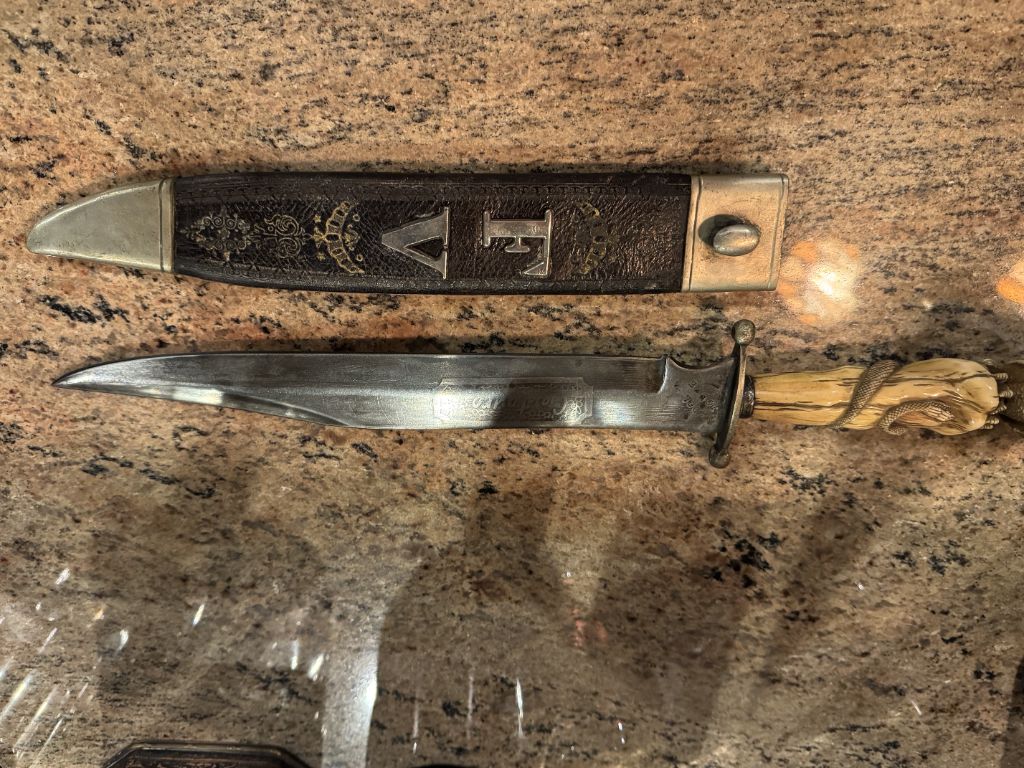
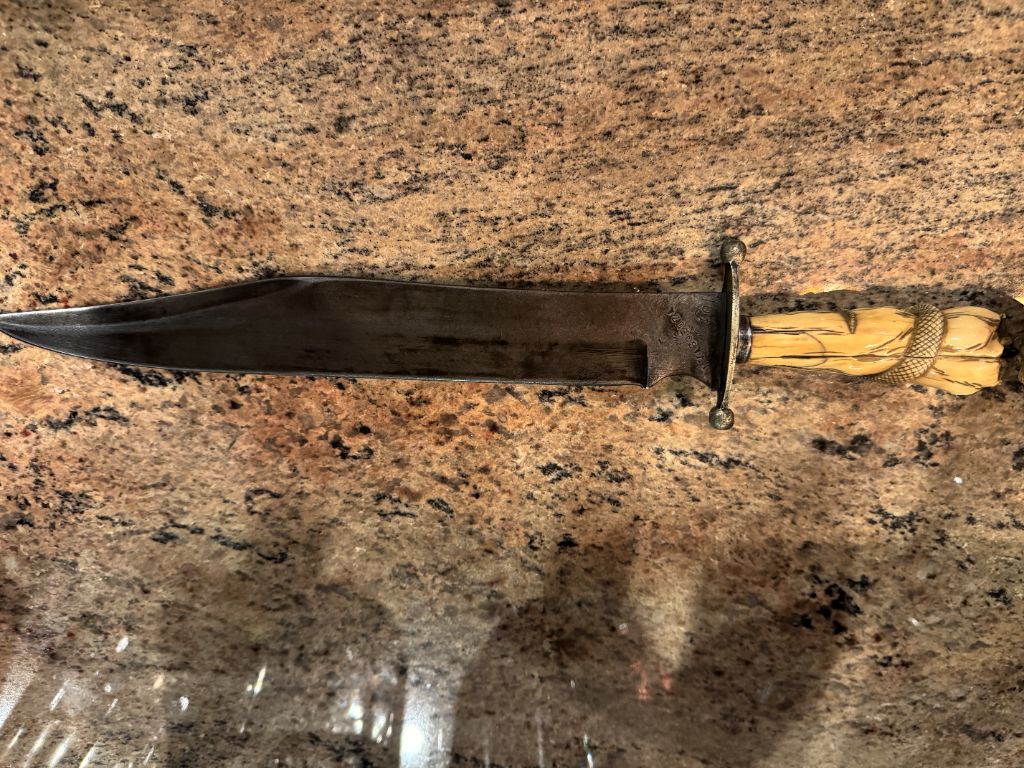
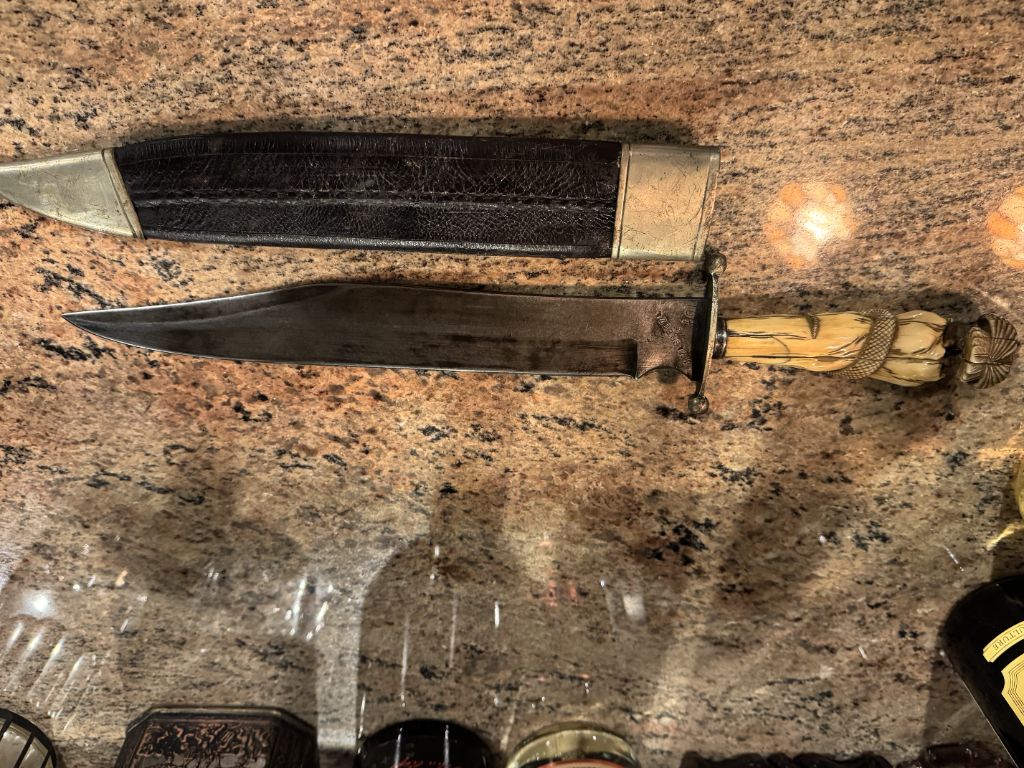
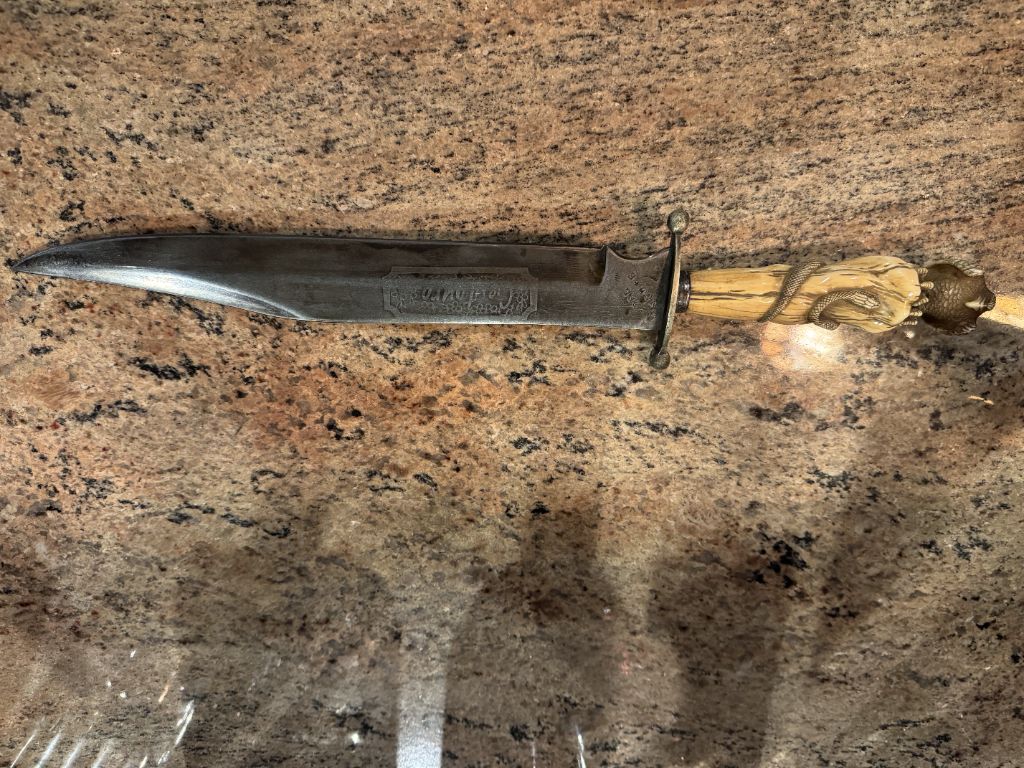
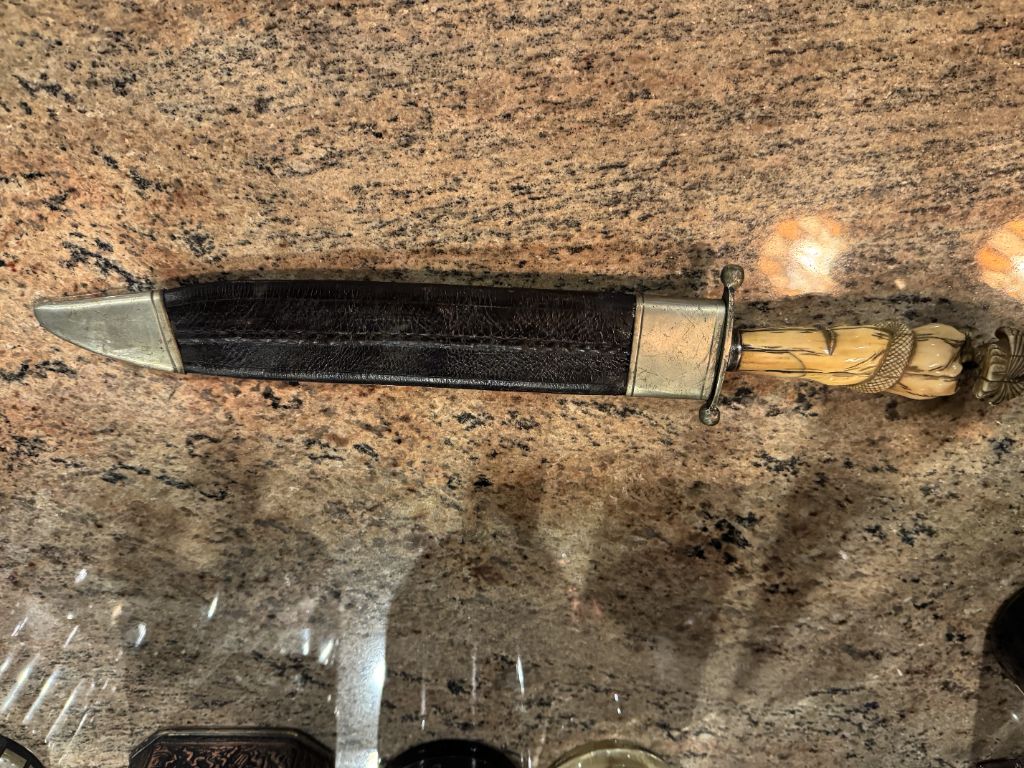
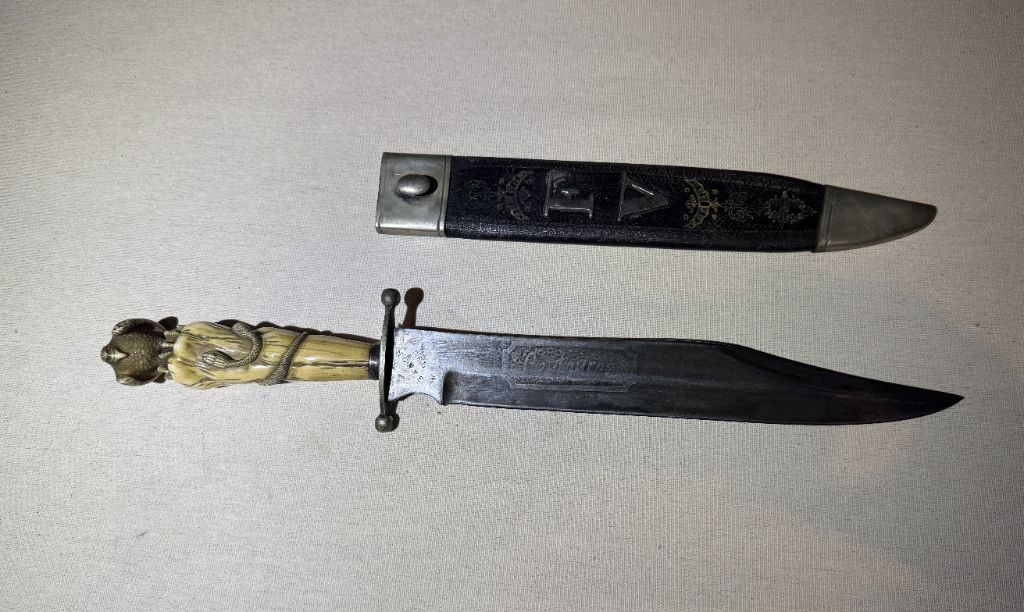
Full view — knife with leather sheath displaying the "FV" plate (Francisco Villa)
rebelkw is a highly respected authenticator of American Bowie knives and American Indian artifacts, with decades of expertise in identifying, attributing, and evaluating edged weapons of historical significance. rebelkw has served as a buyer and authentication consultant for private collectors of the highest caliber, including Johnny Morris.
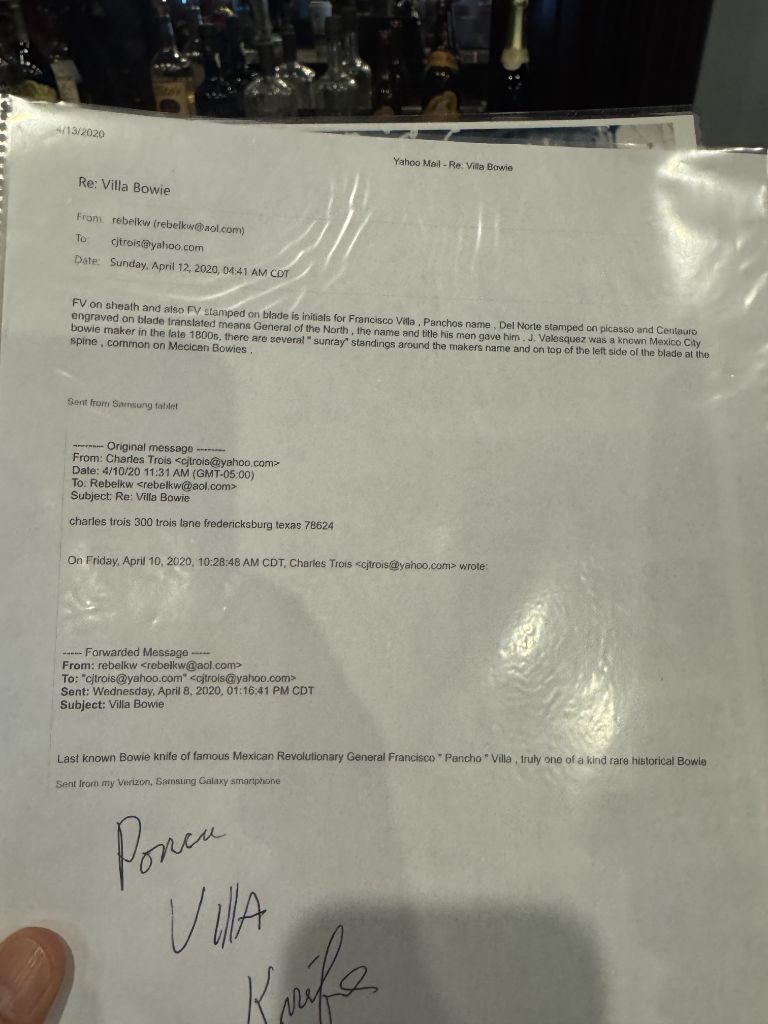
In a written correspondence (April 2020), rebelkw described this knife as "the last known Bowie knife of famous Mexican Revolutionary General Francisco 'Pancho' Villa — truly one of a kind rare historical Bowie." The assessment identifies the "FV" initials on both blade and sheath as standing for Francisco Villa, the "Centauro" engraving as Villa's revolutionary title, and J. Velazquez as a documented Mexico City bowie maker of the late 1800s.
rebelkw explains: "FV on sheath and also FV stamped on blade is initials for Francisco Villa, Pancho's name. Del Norte stamped on [blade] and Centauro engraved on blade translated means General of the North, the name and title his men gave him. J. Velazquez was a known Mexico City bowie maker in the late 1800s, there are several 'sunray' stampings around the maker's name and on top of the left side of the blade at the spine, common on Mexican Bowies."
Every mark on this knife tells a story. Together they form a portrait of one of the most famous figures of the Mexican Revolution.
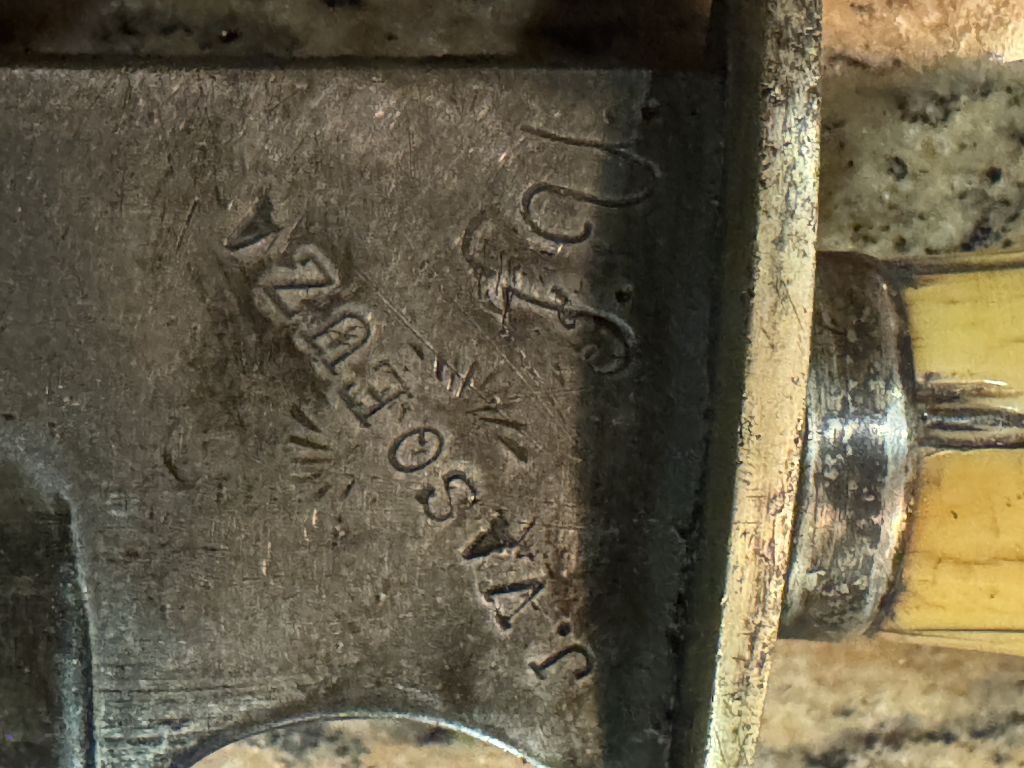
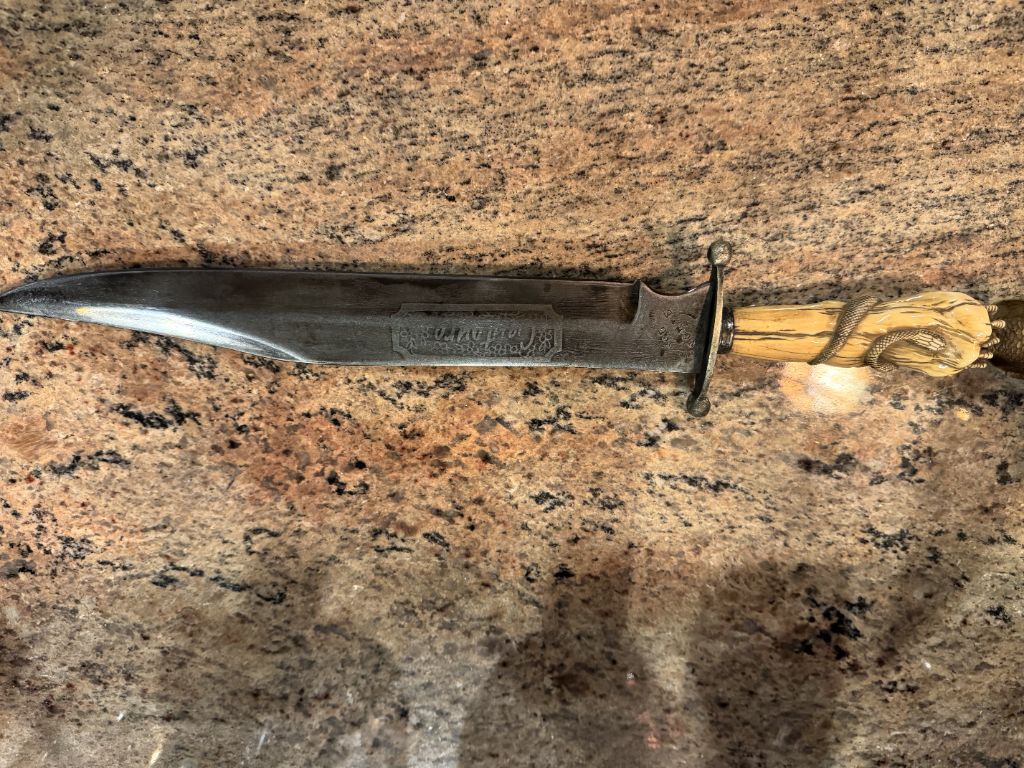
Maker's stamp on the ricasso — J. Velazquez was a documented Mexico City bowie maker working in the late 19th century. The sunburst motif surrounding the name is a characteristic signature of authentic Mexican-made Bowies of this period.
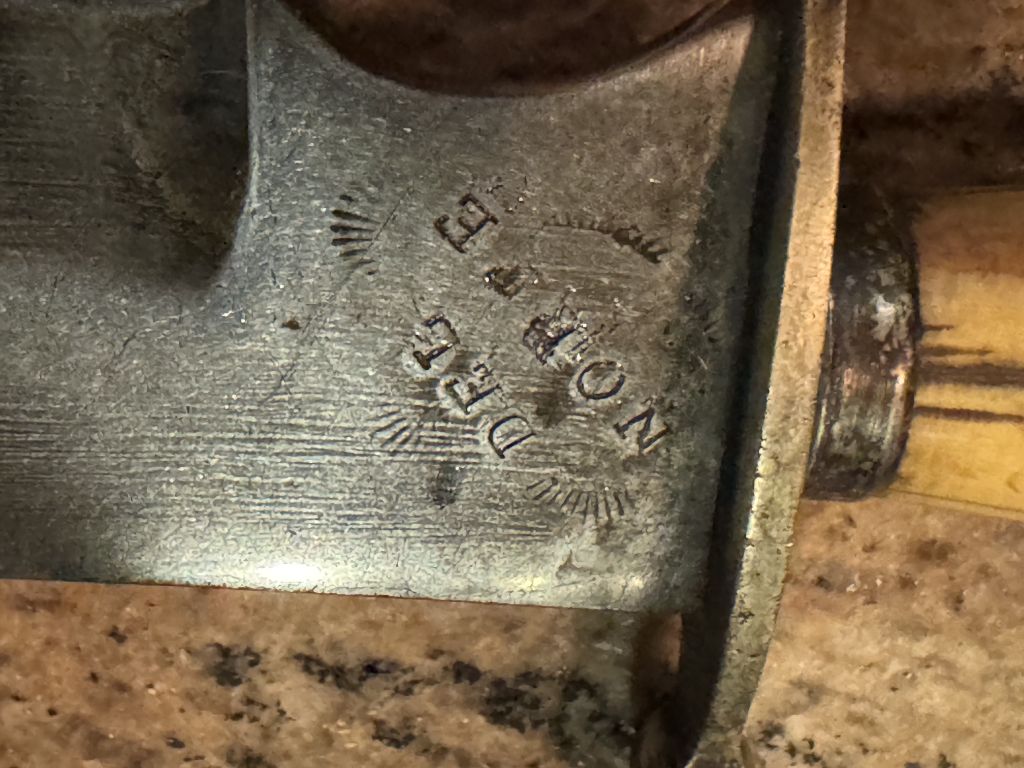
"Of the North" — this stamp corresponds directly to Pancho Villa's famous revolutionary title, El Centauro del Norte (The Centaur of the North). The presence of this phrase alongside the other markings further establishes the knife's connection to Villa.
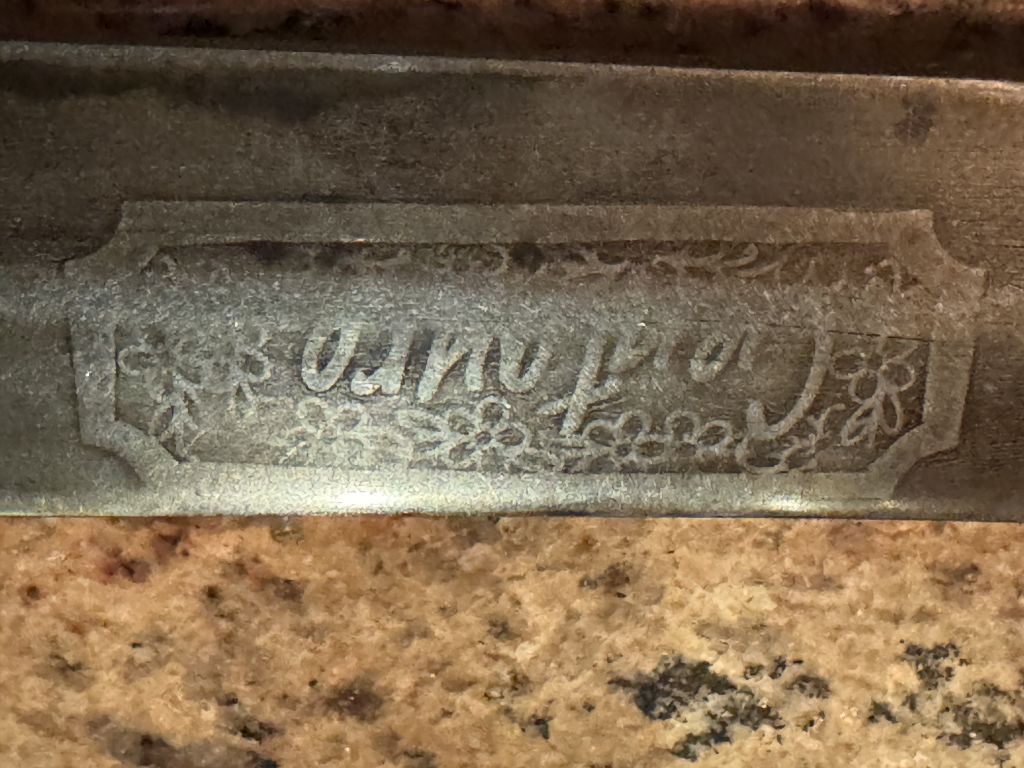
Cursive cartouche engraved on the flat of the blade — "Centauro" is the first word of Villa's iconic title El Centauro del Norte, the name his men gave him. The engraving shows expert period craftsmanship, filled with oxidation consistent with age.
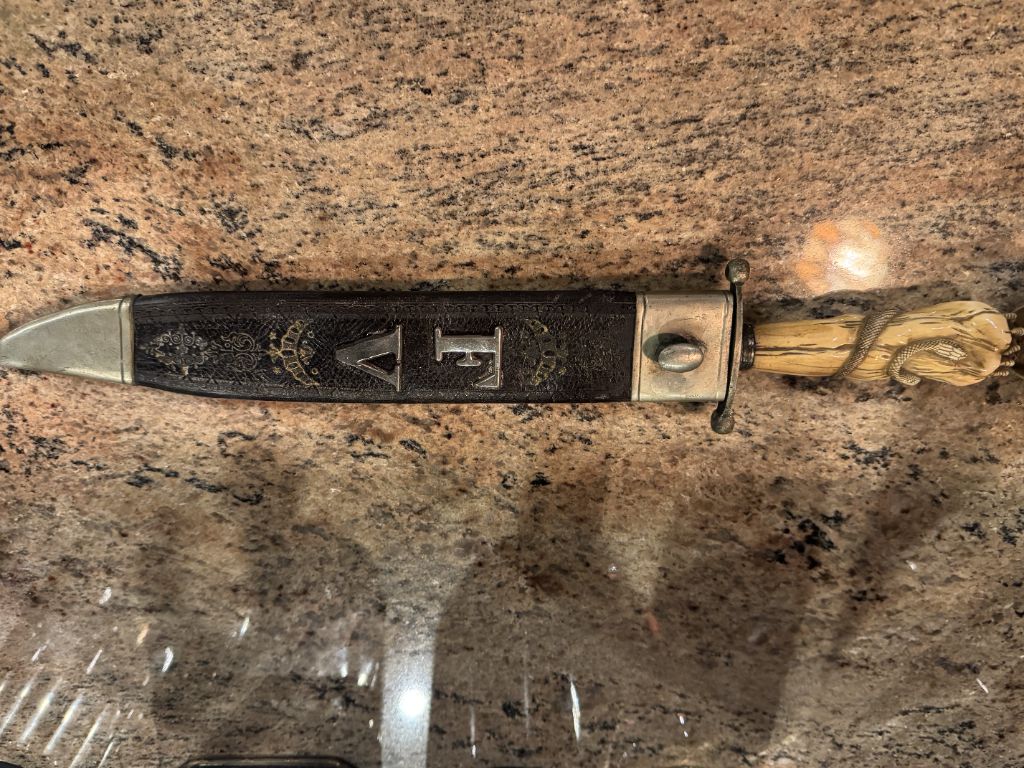
The sheath carries a decorative metal plate with the initials "FV" surrounded by a sunburst/floral motif — standing for Francisco Villa, Pancho Villa's real given name. A matching "FV" stamp appears on the blade itself.
Multiple sunburst/sunray decorations appear on both the blade and sheath. According to authentication expert rebelkw, these "sunray stampings around the maker's name and on top of the left side of the blade at the spine" are characteristic and "common on Mexican Bowies" of this period, confirming the knife's authentic Mexican manufacture and era.
A written email correspondence dated April 8–12, 2020 from rebelkw ([email protected]) to Charles Trois ([email protected], Fredericksburg, Texas) provides a detailed point-by-point authentication of the knife.
"Last known Bowie knife of famous Mexican Revolutionary General Francisco 'Pancho' Villa, truly one of a kind rare historical Bowie." — rebelkw, April 2020
The email specifically addresses every marking on the knife: the FV initials (Francisco Villa), the DEL NORTE and CENTAURO inscriptions (Villa's title), the J. Velazquez attribution (documented Mexico City maker), and the sunray decoration (typical of authentic Mexican Bowies).
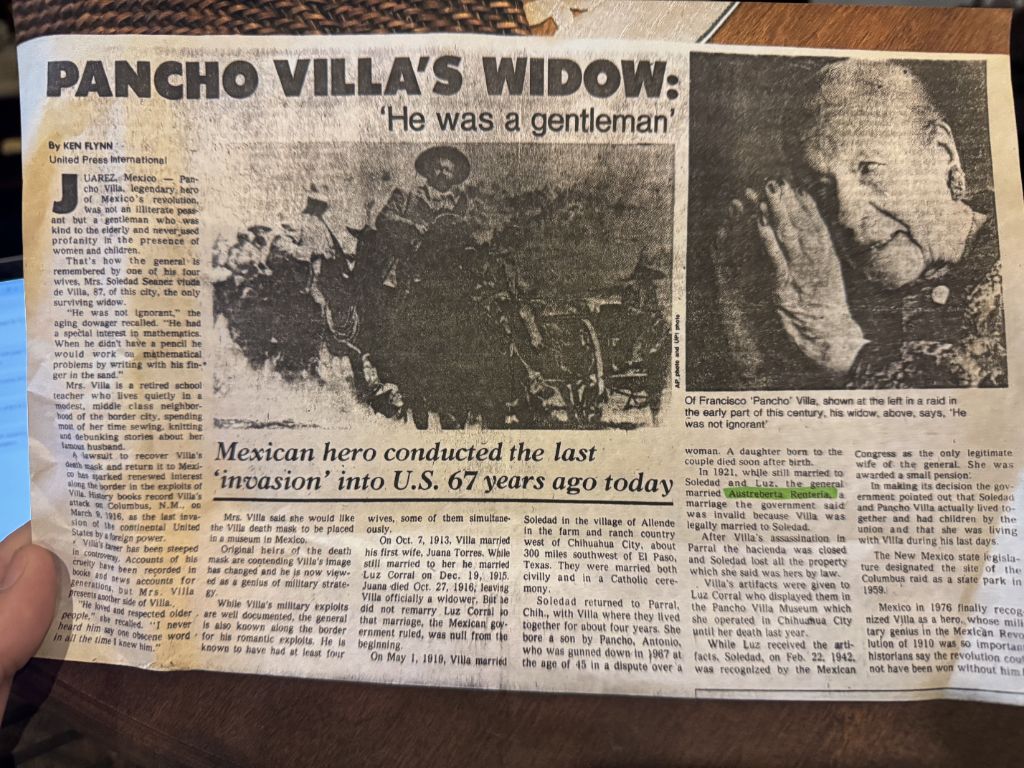
A newspaper clipping titled "Pancho Villa's Widow: 'He Was a Gentleman'" (United Press International, by Ken Flynn) accompanies the knife as contextual historical documentation. The article features an interview with Soledad Seanez de Villa, Villa's surviving widow, and includes accounts of Villa's character, his role in the Mexican Revolution, and his assassination in 1923.
"He was not ignorant. He had a special interest in mathematics." — Soledad Seanez de Villa, Pancho Villa's widow
The clipping's reference to Villa's revolutionary career, his multiple marriages, and Mexico's eventual recognition of Villa as a national hero in 1976 places the knife firmly within documented history.
The provenance documentation presented here represents owner-supplied materials. Independent verification by specialist curators, forensic experts, or institutional authenticators is recommended for formal acquisition purposes.
To understand the significance of this artifact, one must understand the legend it represents.
José Doroteo Arango Arámbula is born in Durango, Mexico. He would later adopt the alias Francisco "Pancho" Villa while evading federal authorities during his years as a bandit — the same initials, F.V., that appear on this knife and its sheath.
Villa joins the Mexican Revolution, fighting alongside Francisco Madero against the Díaz dictatorship. His brilliant cavalry tactics and charismatic leadership quickly elevated him from bandit to one of the war's most feared and celebrated commanders.
Villa's men bestow upon him the title El Centauro del Norte — The Centaur of the North — honoring his almost supernatural command of horses and horsemen in battle. The word Centauro is engraved on this very blade; Del Norte is stamped beside the maker's mark.
Villa leads the last foreign invasion of the continental United States, attacking Columbus, New Mexico on March 9, 1916. The raid killed 18 Americans and prompted General Pershing's famous but ultimately unsuccessful "Punitive Expedition" into Mexico.
On July 20, 1923, Villa is ambushed and killed in Parral, Chihuahua — ending the life of one of Mexico's most legendary revolutionary figures.
Mexico officially recognizes Pancho Villa as a national hero, acknowledging his decisive military role in the Mexican Revolution of 1910. His name is inscribed in gold letters in the Chamber of Deputies. Artifacts tied to Villa are among the most sought-after relics of Latin American history.
"He was not ignorant. He had a special interest in mathematics. When he didn't have a pencil he would work his mathematical problems by writing with his finger in the sand."— Soledad Seanez de Villa, Pancho Villa's surviving widow, as quoted in the accompanying newspaper documentation
Click any image to open the full-screen viewer with zoom. Use mouse wheel, pinch, or the +/− controls to inspect details closely.